
Australia Tightens Medical and Safety Rules – Licence Cancelled for Drivers Over 60 as Australia Tightens Medical and Safety Rules has become a widely discussed topic as new road safety measures take effect across the country. Australian authorities are placing stronger emphasis on health, fitness, and driving ability among older motorists to reduce accident risks. While age itself is not the only factor, updated medical and safety assessments are now playing a bigger role in determining licence validity. These changes aim to balance public safety with independence, ensuring that experienced drivers can continue driving only when they meet required standards set by Australian transport regulators.
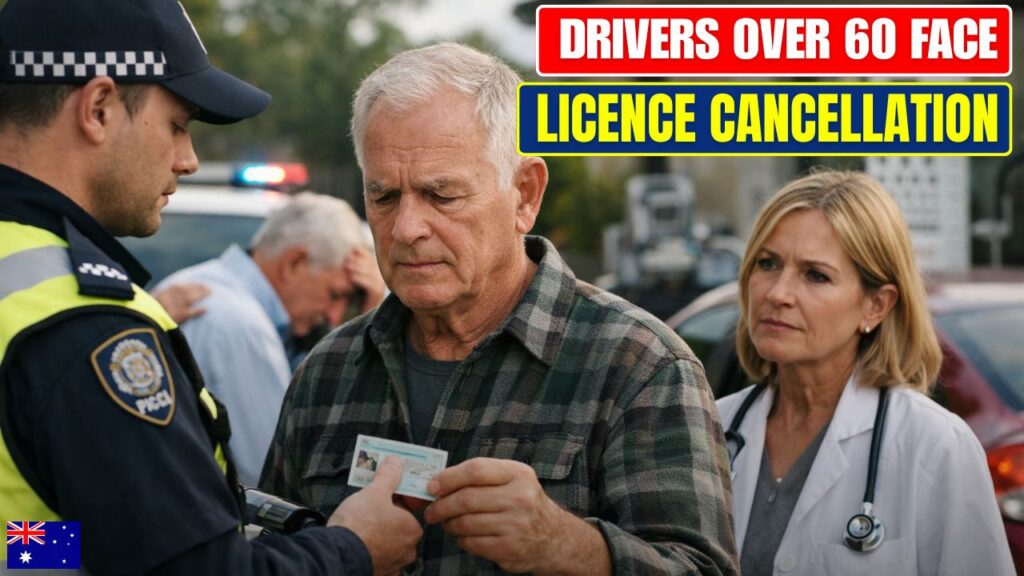
Licence cancellation rules for drivers over 60 in Australia
Across Australia, licence cancellation for drivers over 60 is increasingly linked to stricter medical and safety evaluations rather than age alone. Australian citizens in this age group may be required to undergo regular health checks that assess vision, cognitive function, and overall physical fitness. These assessments help identify medical conditions that could affect reaction time or decision-making on the road. State transport authorities have clarified that licences are not automatically cancelled at 60, but failure to meet medical standards can lead to suspension or cancellation. This approach allows safer drivers to continue while reducing risks linked to untreated or unmanaged health conditions.
 Driving Licence Rules Change in Australia with New Renewal Tests and Fees Starting in 2026
Medical assessments affecting older drivers under Australian regulations
Under current Australian regulations, medical assessments play a critical role in determining whether older drivers can retain their licences. For Australians aged 60 and above, doctors may be required to report conditions such as severe vision loss, epilepsy, or advanced cognitive decline. These medical reports are reviewed by state-based licensing agencies, which decide if restrictions, renewals, or cancellations are necessary. In many cases, conditional licences are issued, allowing driving during daylight hours or within limited distances. This system reflects Australia’s focus on proportional safety measures rather than blanket restrictions for senior drivers.
 Australia Activates Air Traffic Cameras Nationwide as Drivers Face Instant Fines Up to $1,500
| Age Group | Medical Review Frequency | Possible Outcome | Authority Involved |
|---|---|---|---|
| 60–69 years | As required | Full or conditional licence | State transport departments |
| 70–74 years | Periodic medical check | Renewal with conditions | Licensing authorities |
| 75–84 years | Regular assessments | Restricted or renewed licence | Medical practitioners & agencies |
| 85+ years | Annual medical review | Renewal or cancellation | State road safety bodies |
Road safety reforms impacting senior motorists across Australia
Road safety reforms across Australia are increasingly focused on senior motorists, reflecting demographic changes and rising numbers of older drivers. Authorities across Australia are prioritising evidence-based policies, including medical screenings and on-road assessments, to maintain safe traffic conditions. For older Australians, these reforms may feel restrictive, but officials emphasise that the goal is prevention rather than punishment. By identifying potential risks early, transport departments aim to reduce serious accidents involving age-related impairments. These reforms also encourage alternative mobility options, helping senior drivers stay active and connected even if driving privileges change.
How Australian citizens over 60 can prepare for licence reviews
Australian citizens over 60 can prepare for licence reviews by staying proactive about their health and driving skills. Regular eye tests, health check-ups, and discussions with medical professionals can help address issues before they affect licensing outcomes. Many Australians also choose refresher driving courses designed for older drivers, which improve confidence and update knowledge of current road rules. Keeping medical records organised and responding promptly to licensing notices can reduce stress during the review process. Preparation ensures that older drivers understand their rights and responsibilities under Australia’s evolving road safety framework.
Frequently Asked Questions (FAQs)

1. Are licences automatically cancelled for drivers over 60 in Australia?
No, licences are not automatically cancelled based on age; decisions depend on medical and safety assessments.
2. Who decides if an older driver’s licence should be cancelled?
State transport authorities make the decision based on medical reports and safety evaluations.
3. Can older Australians receive a restricted licence instead of cancellation?
Yes, conditional licences with limits such as daylight driving are commonly issued when appropriate.
4. How often do drivers over 60 need medical assessments?
The frequency varies by age, health condition, and state regulations, increasing as drivers get older.