
Australia Child Car Seat Rule – Australia is preparing to implement updated child car seat regulations in 2026, aiming to improve road safety for infants and young children. These changes focus on age-appropriate restraints, clearer height and weight limits, and stricter enforcement across states and territories. Parents and caregivers need to understand how the new rules affect everyday travel, school drop-offs, and long-distance journeys. As child safety laws continue to evolve in Australia, staying informed is essential to avoid fines and, more importantly, to ensure children are properly protected while travelling in private vehicles, taxis, or ride-share services.
2026 Child Car Seat Rules in Australia for Safer Travel
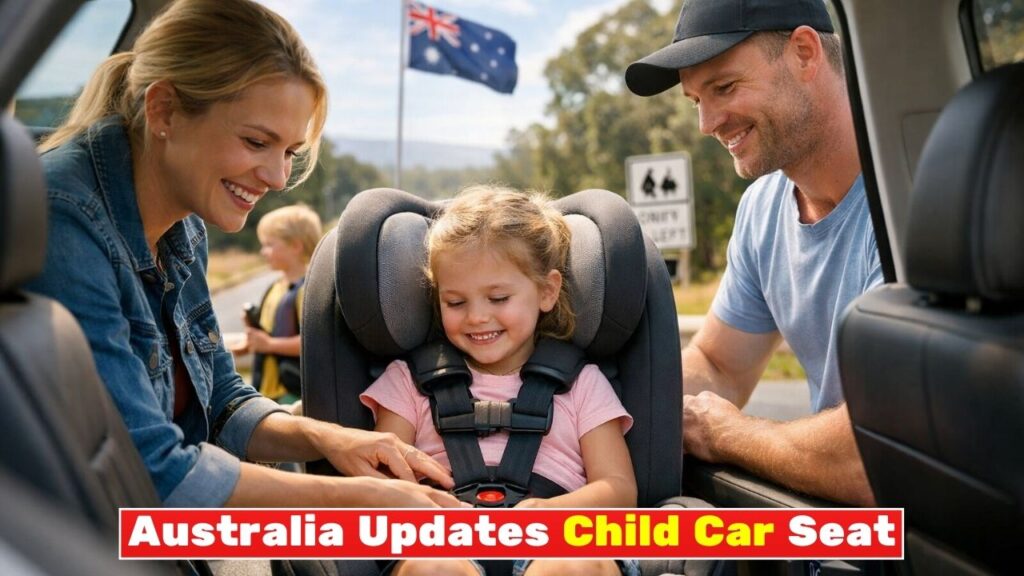
The 2026 child car seat rules in Australia are designed to align safety standards with updated research on child development and crash protection. Under the revised approach, children will be required to remain in rear-facing seats for longer, based on height rather than just age. Forward-facing and booster seat transitions will also depend on meeting minimum size thresholds. Australian regulators emphasise that using the correct restraint significantly reduces injury risk. These rules apply to private cars, rental vehicles, and ride-share services, making compliance essential for all drivers transporting children across Australia.
 Driving Licence Renewal Rules Changing in Australia 2026: Seniors Must Check These Updates
Australian Child Restraint Law Changes Parents Must Know
Australian child restraint law updates in 2026 place greater responsibility on parents and caregivers to choose seats that match a child’s physical growth. Instead of relying only on age brackets, the rules highlight manufacturer guidelines for height markers. Australian authorities have also clarified that improperly installed seats may attract penalties even if the seat type is correct. Regular checks and professional fittings are encouraged nationwide. These changes aim to reduce confusion among Australian families while creating a consistent safety standard across different states and territories.

| Child Age/Size | Required Restraint |
|---|---|
| 0–6 months | Rear-facing infant seat |
| 6 months–4 years | Rear or forward-facing seat with harness |
| 4–7 years | Forward-facing seat or booster seat |
| 7+ years (under height limit) | Booster seat with seatbelt |
New Child Safety Seat Standards Across Australia in 2026
The new child safety seat standards across Australia in 2026 focus on harmonising rules between states to reduce confusion for travelling families. While enforcement remains state-based, the core requirements are consistent nationwide. Australian road authorities will increase roadside checks and awareness campaigns to help drivers understand the updated rules. Penalties may include fines and demerit points for non-compliance. The goal is not punishment but prevention, ensuring that children across Australia benefit from the highest level of in-vehicle protection.
How Australian Families Can Prepare for Car Seat Rule Updates
Australian families can prepare for the 2026 car seat rule updates by reviewing their current restraints and checking compliance with new height and weight guidelines. Experts recommend having seats professionally installed and reassessed as children grow. Retailers and road safety centres across Australia often provide free fitting services and advice. Keeping receipts and manuals can also help if questions arise during inspections. Early preparation allows Australian parents to adapt smoothly without last-minute stress or unexpected penalties.
Frequently Asked Questions (FAQs)

1. When do the 2026 child car seat rules start in Australia?
The updated rules are expected to apply from early 2026, depending on state enforcement timelines.
2. Do the new rules apply to taxis and ride-share vehicles?
Yes, child restraint requirements apply to taxis and ride-share services across Australia.
3. Will fines increase under the new Australian car seat laws?
Penalties may vary by state, but stricter enforcement could lead to higher fines for non-compliance.
4. Can I keep using my current child car seat in 2026?
You can use it if it meets Australian standards and matches your child’s updated height and weight requirements.