
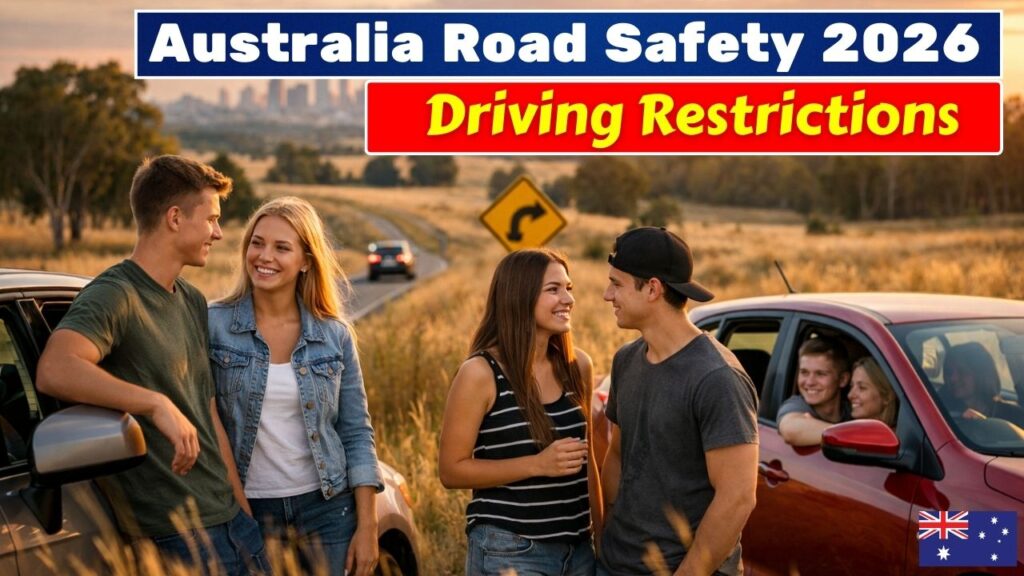
Australia Road Safety 2026 – Australia’s road safety agenda is undergoing renewed scrutiny as policymakers look ahead to 2026 with a strong focus on young drivers. Rising crash statistics involving provisional licence holders have triggered discussions around stricter licence rules and new passenger limits aimed at reducing risk during the most vulnerable driving years. Across Australia, transport authorities are weighing evidence-based reforms that balance safety with independence for young motorists. These proposed changes are not yet law, but they signal a national push to improve driver behaviour, reduce fatalities, and create safer roads for all users, especially during night-time and high-risk driving conditions.
Proposed Young Driver Licence Rules Across Australia in 2026
Under the Australia road safety 2026 proposals, young driver licence rules may become more structured and demanding than in previous years. Australian citizens entering provisional driving stages could face longer learner periods, stricter logbook requirements, and enhanced hazard perception testing. Authorities are also considering tighter penalties for mobile phone use, speeding, and drink-driving among P-plate holders. These measures are designed to ensure that new drivers gain more supervised experience before driving independently. By reinforcing graduated licensing systems, policymakers aim to reduce high-risk behaviour that often leads to serious crashes involving young Australians during their first few years on the road.

Passenger Restrictions for Young Drivers Under Australian Government Plans
Another key feature of the proposed reforms involves passenger restrictions for young drivers, an issue closely examined by the Australian government. Evidence shows that carrying multiple peer passengers significantly increases distraction and crash risk for inexperienced drivers. As a result, new rules may limit the number of passengers under a certain age during night-time hours. These restrictions would apply mainly to provisional licence holders and are intended to curb risky group driving behaviour. While exemptions may exist for family members or work-related travel, the broader goal is to create safer driving environments for young motorists nationwide.

| Proposed Rule Area | Current Practice | 2026 Proposal |
|---|---|---|
| Learner Period Length | 10–12 months (state-based) | Extended minimum duration |
| Night-Time Driving | Limited restrictions | Stricter curfews for P-plates |
| Passenger Limits | Varies by state | Reduced peer passengers |
| Mobile Phone Penalties | Standard fines | Higher fines and demerits |
Road Safety Reforms for Young Motorists Across the Nation
Broader road safety reforms for young motorists across the nation are being shaped by long-term data and international best practices. Transport agencies are collaborating with schools, parents, and insurers to promote safer driving habits from an early age. Educational programs, combined with stricter enforcement, are expected to complement the proposed licence changes. For Australians, these reforms aim to reduce road trauma without unfairly limiting mobility. By focusing on prevention rather than punishment alone, the national approach seeks to foster a culture of responsibility among young drivers as they transition into full licence holders.
How New Licence Rules Could Affect Australian Families
The potential impact of new licence rules extends beyond young drivers to Australian families as well. Parents may need to spend more time supervising learner drivers and helping them meet extended practice requirements. While this could initially feel burdensome, many families see long-term safety benefits. Fewer crashes mean lower insurance costs, reduced medical expenses, and greater peace of mind. For households across Australia, these changes may encourage more open discussions about road safety, responsibility, and the privileges that come with driving, ultimately supporting safer outcomes for communities nationwide.
Frequently Asked Questions (FAQs)
1. Are the Australia road safety 2026 rules confirmed?
No, the proposed licence rules and passenger restrictions are still under review and may vary by state.
2. Who will be affected by the new young driver passenger limits?
Passenger restrictions are expected to apply mainly to provisional licence holders.
3. Will these rules be the same across all Australian states?
Each state and territory may adopt the reforms differently based on local legislation.
4. When could the new licence rules take effect?
If approved, changes could begin rolling out during 2026 following legislative updates.